Society & Community
Local archives across generations
A gentle method for using local archives to connect generations through provenance, conversation, and shared interpretation.

Local archives are often made of ordinary things: a letter, a recipe, a shop sign, a photograph, or a notebook with a familiar hand. Their value is not that they prove one complete story. It is that they give different generations something specific to discuss, question, and place in context.
Begin with provenance
Record where an item came from, who keeps it, and what is known about its date. Mark uncertainty clearly. A note that says “probably” is more useful than a confident detail that cannot be checked later. Keep copies respectful of privacy and of the person who owns the original.
Invite more than one reading
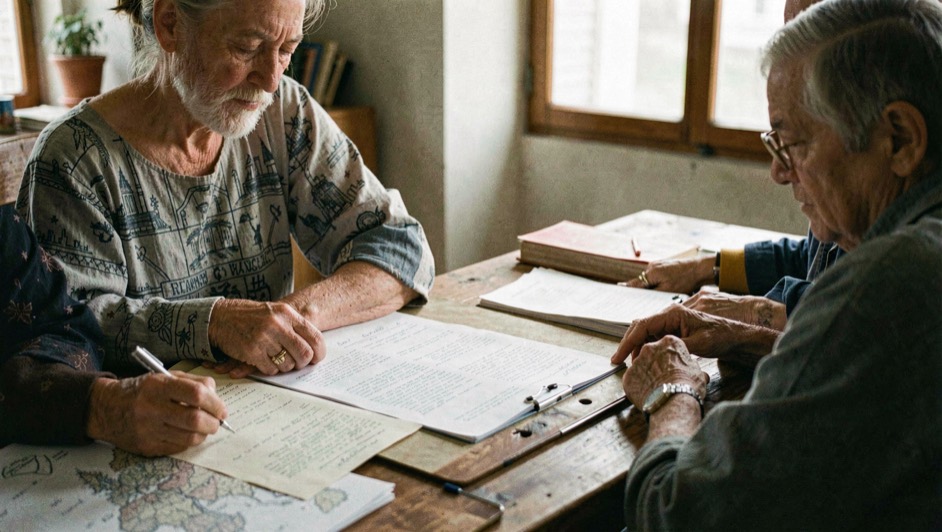
Ask what a younger person notices first and what an older person remembers around it. The difference is not a problem to solve. It is part of the archive. A shared caption can include both the visible description and the questions that remain open.
- Choose a small set of objects with clear permission.
- Scan or photograph them without altering the originals.
- Save names, dates, places, and uncertainty in a simple register.
- Return a copy to the people who contributed.
The archive becomes a bridge when it leaves room for care, disagreement, and another generation's additions.
Design the register before scanning
Assign each object a simple identifier and record its owner or custodian, physical format, approximate date, place, people shown or mentioned, language, condition, rights note, and the source of every description. Keep uncertain information marked as uncertain. Two relatives may remember a date or name differently; both accounts can remain in the notes until stronger evidence appears.
A spreadsheet is enough for a small collection. Use controlled terms for repeated fields such as format, place, or permission, and leave longer memories in a notes field. Store the register separately from the image files and keep regular copies. The register is what makes a folder of scans searchable and understandable later.
Digitise for preservation and access
Clean the work area, handle fragile items carefully, and capture the entire object before making detail crops. Photograph the back of prints and documents when it contains writing, stamps, or marks. Keep a high-quality master file and derive smaller access copies for email or the web. Do not repeatedly edit and resave the master.
Use file names based on the stable identifier rather than a person's full private details. A pattern such as collection, item number, side, and version is easier to maintain than a descriptive sentence. Add captions and translations in the register or a sidecar file so they can be revised without altering the image itself.
Invite memory without forcing agreement
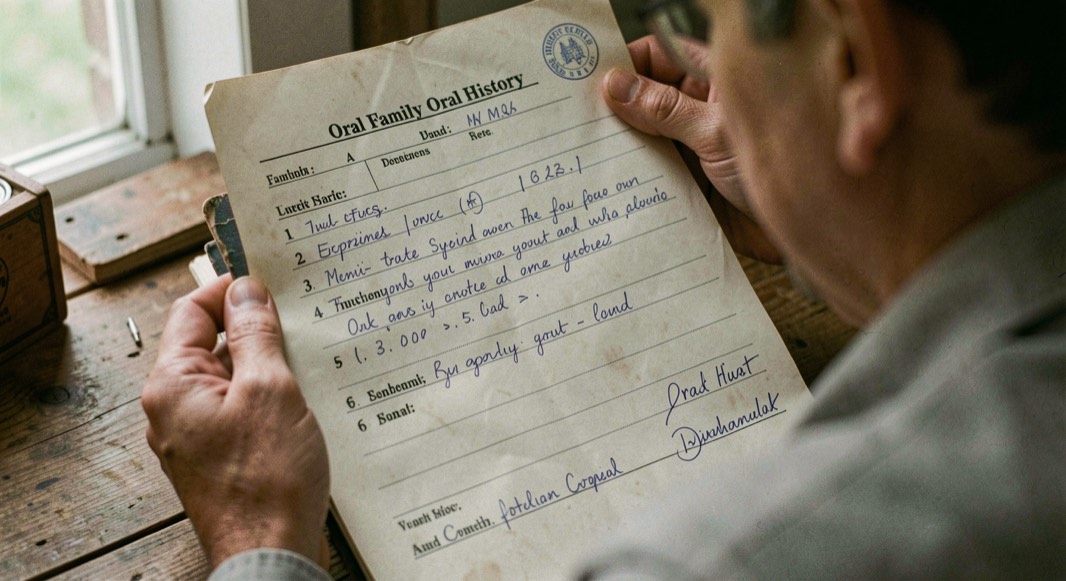
Bring one or two objects to a conversation and ask open questions about what is visible, what happened around it, and what the object was used for. Record who supplied each detail and the date of the conversation. If audio is captured, explain where it will be stored and who may hear it. A transcript or careful summary makes the memory searchable and gives the contributor a chance to correct names or wording.
Translation can reveal different meanings rather than one perfect equivalent. Keep the original phrase beside the translation when tone, profession, place, or family terminology matters. A glossary of recurring names and terms helps future contributors understand choices already made.
Set practical access levels
- Public: cleared items suitable for open display.
- Community: material shared with an agreed group.
- Family: items limited to relatives or named participants.
- Restricted: sensitive records held without current publication.
- Review: ownership, identity, or permission still unresolved.
Return digital copies and updated captions to contributors. Record corrections rather than silently replacing one account with another. An archive connects generations when people can recognise their contribution, understand the limits on access, and add context without surrendering ownership of the original object.
Keep the context, make the decision visible, and leave a useful next step.
Continue the thread
Read the local archives topic, open the working abroad dossier, or meet the editorial desk.