Culture & Media
Design portfolios that explain decisions
A working structure for design portfolios that makes decisions, constraints, and revisions easy to understand.

A design portfolio does not need to present every finished screen. It needs to help a reader understand the work. That means giving each project a question, a setting, and a sequence of decisions. A polished image without its conditions can look impressive while saying very little about the practice behind it.
Give the project a useful frame
Open with the situation that made the work necessary. Describe the audience in plain language, list the constraints that shaped the brief, and mark your role. If the project was collaborative, name the handoff rather than claiming the whole object.
Let revision carry meaning
Show an early direction beside the change that followed. The contrast can be small: a different hierarchy, a shorter form, a clearer label, or a more reachable action. Explain what prompted the change. This is where a portfolio moves from gallery to evidence.
- Write the project question in one sentence.
- Place the strongest artifact near the beginning.
- Use annotations only where they add context.
- Close with what you would test next.
Clarity is not the same as reducing the work to a formula. It is a generous way to let a reader see the choices that shaped it.
Give every case study a clear spine
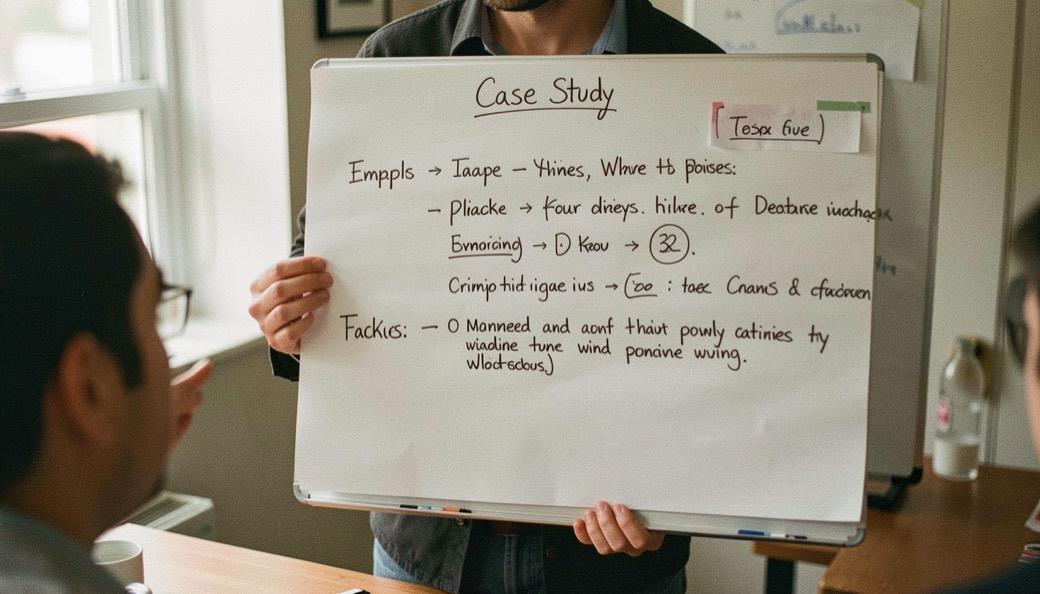
A reader should be able to answer five questions without searching: what needed to change, who the work served, what you were responsible for, which constraint shaped the direction, and what happened after the design was used or reviewed. Put those answers near the beginning. A compact project panel with role, collaborators, duration, outputs, and status can carry facts that would otherwise interrupt the narrative.
A portfolio also benefits from context about the industry the work sits in. Designers who move into aviation products face a specific vocabulary: certificates, repair stations, fuel grades, parts traceability. A field guide to the working side of aviation explains how training, ground service, and the industry map fit together in the United States. That background helps a designer ask better questions during research and describe constraints accurately in a case study. It also keeps the writing grounded when a project touches regulated work, where the terms carry legal weight and a loose paraphrase can mislead the reader.
When an outcome cannot be measured publicly, describe the evidence you do have. That might be a usability observation, an accessibility review, a stakeholder decision, a reduced support burden, or a clearer handoff. Avoid converting a private result into an invented percentage. Specific qualitative evidence is more credible than a number that cannot be explained.
Select artifacts for what they reveal
Use a finished screen to establish visual quality, then choose process material that answers a question. A content model can show how information was organised. An annotated flow can show where a task was shortened. Two versions of a component can reveal why hierarchy or language changed. A research note can show how an assumption was challenged. Remove decorative iterations that do not alter the reader's understanding.
Captions should identify the decision visible in the image. Instead of writing “early exploration,” explain that the first route exposed too many choices before the user had selected a service. This makes the artifact useful to someone who reads quickly or returns to the project later.
Make collaboration and limits legible
State what other people contributed. If a researcher planned interviews, a developer shaped technical feasibility, or an editor changed the content structure, name the boundary of your role. This does not weaken the case study. It demonstrates that you can work inside a real process and recognise where decisions came from.
Confidential work can still become a useful case study. Rebuild a neutral flow, blur or replace sensitive data, and discuss the method rather than the client. If even the structure is restricted, create a short capability note that explains the kind of problem, your responsibilities, and what you learned without presenting protected material.
Edit for two reading speeds
- Use headings that state decisions rather than generic phases.
- Keep the first screen understandable in less than a minute.
- Offer deeper evidence below for a specialist reader.
- Check colour contrast, keyboard order, alt text, and mobile crops.
- End with the unresolved question or next test, not a victory slogan.
Before publishing, ask a peer to describe the project without your help. If they remember the visuals but cannot explain the problem, role, or decisive change, the case study still needs editing. A portfolio succeeds when the work remains attractive and the reasoning remains visible.
Keep the context, make the decision visible, and leave a useful next step.

Continue the thread
Read the portfolio practice topic, open the working abroad dossier, or meet the editorial desk.